


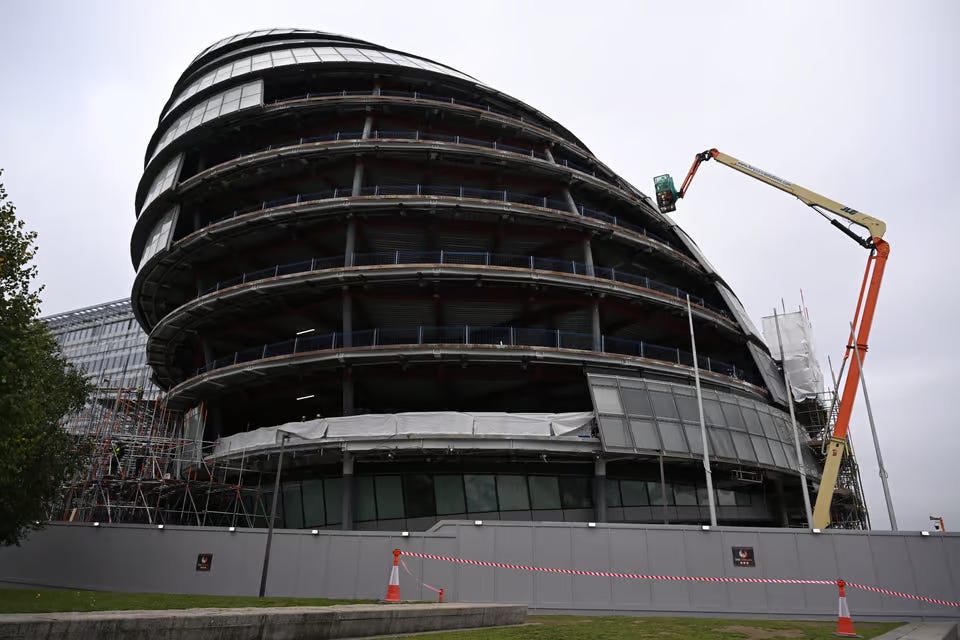
I first started covering London politics almost twenty years ago now and back then it was still big news. A visit to London’s City Hall, which then sat proudly on the South Bank, was to take a trip into the beating heart of the city’s political life.
There was something almost theatrical about covering London politics in those days.
Sitting inside City Hall’s vast glass chamber to watch Ken Livingstone, and then Boris Johnson, face questions in front of the looming financial towers of the City was to play a minor part in its drama.
I wasn’t the only one drawn to its stage. Sitting in the gallery beside me each month were big name journalists from the BBC, ITV and all the major national newspapers, drawn in by the drama of Johnson’s rise to power, as well as a band of so-called ‘citizen journalists’ taking advantage of the pre-social media boom in ‘blogging’ about politics.
Social media as we now know it was then in its infancy, with the only way to Tweet updates about what was happening in the Chamber, being to send an actual text message to Twitter HQ, which was then relayed to their website.
Yet looking back it was remarkable how accessible everything then was for a young aspiring freelance journalist. After every session of Mayor’s Question Time, I would immediately jump into a briefing with Johnson’s spokesman, before descending into the basement cafe where London Assembly members, members of the public and even the Mayor himself would share coffees, sandwiches and plates of curry.
I will always remember the image of Johnson fumbling in his pockets in the queue ahead of us, before turning to ask another blogger and myself to lend him a fiver to pay for his lunch. Some things never change.
Declining Standards
Lots of things have changed in that time, however.
After Johnson left office, the national attention given to London politics gradually drifted away to other stories, before Sadiq Khan ultimately sold up shop and decamped City Hall to a lonely windy spot in the city’s eastern docklands.
The old central London building is now in a process of being dismantled by its private owners and turned into luxury shops and restaurants.
However, it wasn’t just the national attention to our capital’s politics that has drifted away since then, but the very means of holding it.
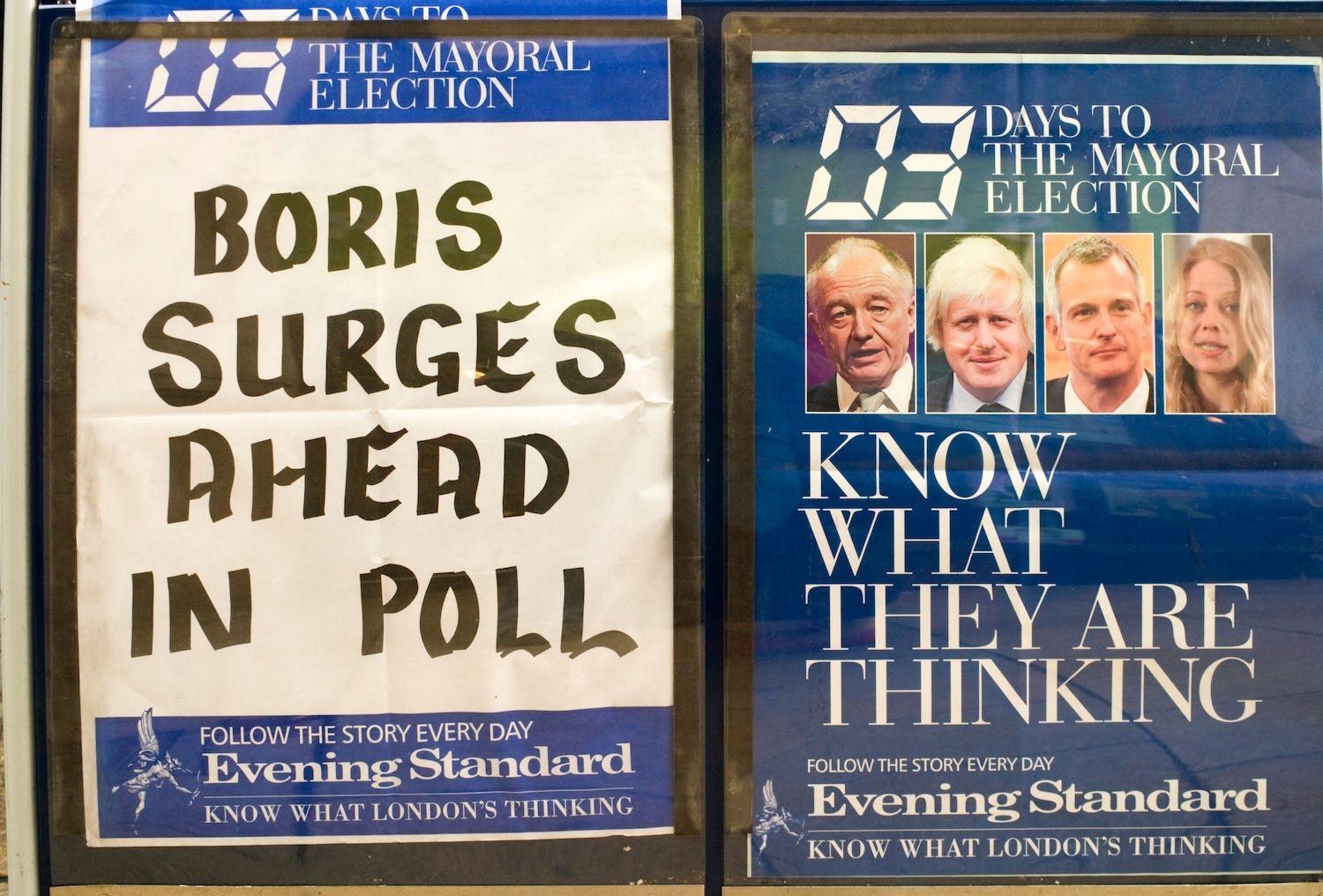
The Evening Standard, whose screaming sandwich boards dominated political life in the capital for so long, was sold for just £1 to a Russian oligarch who understood little about its journalism, or its city. When the Lebedev family first took over, the Standard printed multiple editions each day and employed almost 400 journalists and staff. By last week that number had been reduced to just 16, with the print edition itself long since shuttered.
Ross Lydall, a vastly-experienced Evening Standard journalist who had covered London politics on and off since the start of the London Mayoralty, was among those to leave. The paper is now in the process of being subsumed into another Lebedev purchase - the Independent.
Broadcasters cut back too. BBC London, which was a constant thorn in multiple Mayor’s sides under its great former Political Editor Tim Donovan, faced swingeing cuts, with Donovan himself taking redundancy last year.
Blogging about London has somehow survived, thanks to the economics of Substack, and the brilliant work of a committed few, both locally and city-wide, yet it no longer feels at the heart of political life in the capital in the same way that it once did. In an era of Tiktok and Instagram, the big stories about London are being told in different ways and by different people, many of whom are based in different countries and even different continents, while the actual local politics of the city has taken a step back into the shadows.
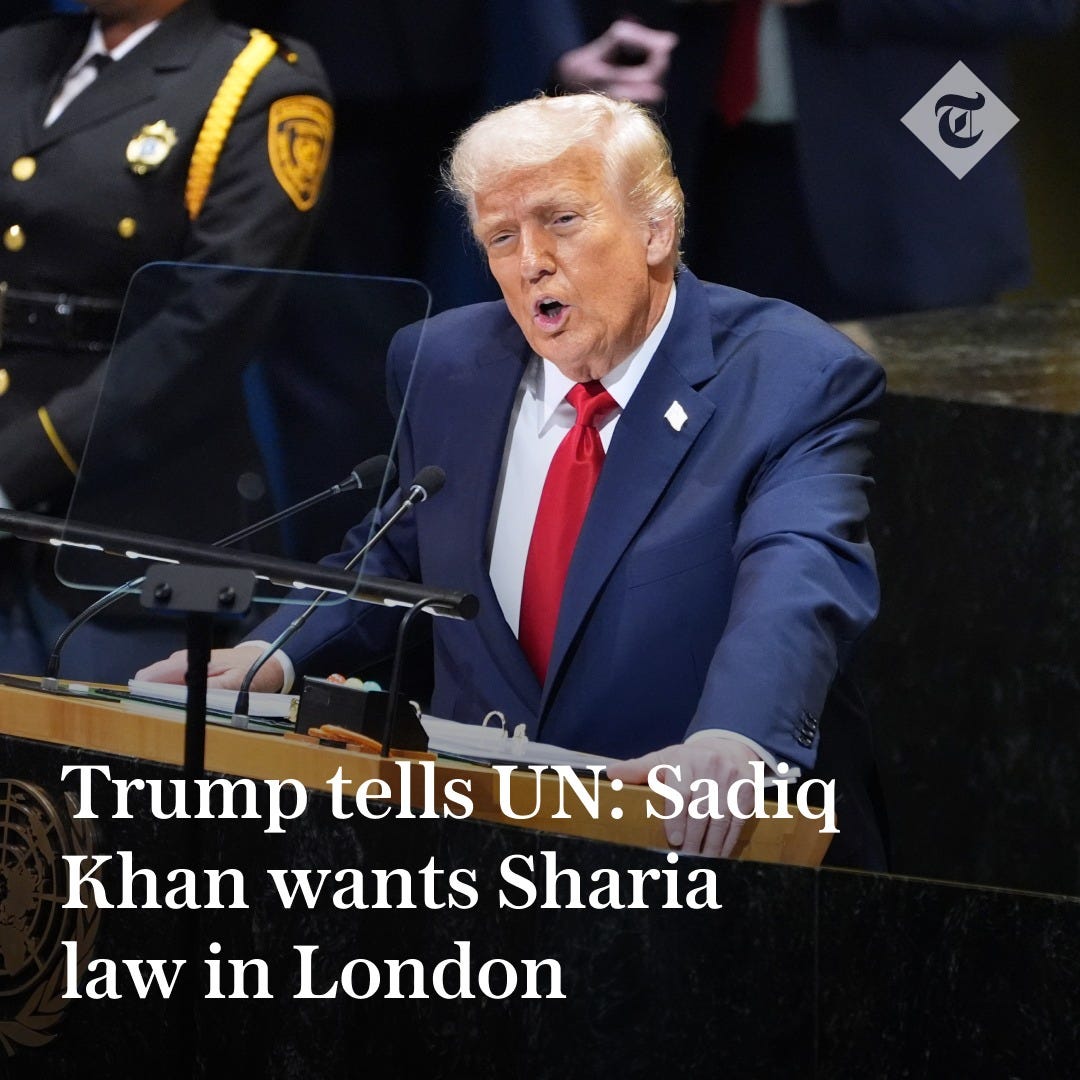
Of course the focus on London is still there in some ways. The fact that the US President and his hangers on still devote so much time and energy to attacking Khan and his city shows the importance London still has on the international stage. Yet the far-right fantasy version of it portrayed in reels, shorts and Tweets is completely detached from the actual politics of a city where eight million people live and work each day.
I was thinking about all this as I visited London’s new City Hall in the Eastern docklands to interview Sadiq Khan this week. Gone were the pulsing crowds of eccentric protesters and tourists that used to buzz around its old central London base, and in its place were a handful of lonely looking figures, taking a break from their desk jobs inside, to sit on a bench, eat a sandwich and stare at the empty docks outside. It felt, in short, like both a literal and metaphorical backwater.
This is reflected inside its chamber. Where City Hall once drew in politicians who went onto become major national figures, like Johnson, Kemi Badenoch and even James Cleverly, the closest the Assembly now has to a big name is Zack Polanski, who will surely not be sticking around for much longer. The Conservative party, which held the City’s mayoralty for almost a decade under Johnson, now appears to have all but given up on the city and its politics, aside from joining in with the MAGA-driven fantasies about its Islamisation.
Leading the Conservative group on the Assembly now is their failed former Mayoral candidate Susan Hall, who is perhaps best known for losing her purse, and any remaining credibility the party still has in London. At next month’s local elections, the party is forecast to lose control of all but a handful of local authorities in the City. Meanwhile Nigel Farage and Reform UK loom in the wings, with plans to hold referendums for outer London boroughs to divorce from the city.
Of course City Hall still plays a significant part in Londoners’ lives under Sadiq Khan. Khan’s decision to push ahead with the expansion of the Ultra Low Emission Zone to outer London caused huge amounts of controversy, and even an actual act of terrorism. Yet London’s air, which was once the dirtiest in Europe, is now significantly cleaner than it once was, cycling infrastructure has significantly improved, and the opening of the Elizabeth Line has been a triumphant success.
Yet in other ways things have undeniably gone backwards. The pipeline of big future transport projects that was put in place under Livingstone and Johnson has mostly dried up thanks to a decade of austerity, whilst bus routes are gradually being scaled back.
The cost of living in London, which was already high when I first started out, has become completely unsustainable for all but the lucky few. Of the friends I grew up with, most have since moved out of the city to raise their families. Primary schools, which were once full to bursting, are now increasingly closing down thanks to a Londoners feeling they can simply no longer afford to live here and raise kids.
Despite the AI-driven stories told about the city on the new forms of global social media, violent crime is actually significantly down in the city. Yet this still feels to me as being as much about rising security as it is about a city whose social life is gradually being hollowed out from within. When the average cost of a pint is almost £7, it pays to stay out of trouble at home.
I’m conscious here of not falling into a middle aged trap of ‘it was better in my day’. Much has improved in London since I first started covering politics in the city and the constant drumbeat of social media clickbait trying to portray it as an Islamist crime-ridden hellhole are as far from reality as it is possible to be. London is still a great city, albeit one that has many problems.
Yet there was something about the city, its politics and its media back in the mid-noughties that definitely has been lost over the past twenty years. Long before Covid, before Brexit and before austerity, London felt like a city whose political story was at the very centre, not just of the nation’s life, but of Europe and the world.
That feeling has now passed.
What has replaced it bears little relation to the city most of us who still live here experience every day.
Hard not to agree. My god-daughter struggles to study at UCL without huge debts, my local primaries are all spending money and effort on promotion, despite being amazing, and my local area struggles for any kind of complex or detailed scrutiny of local politics.
It's hard not to see echos of the north east. From my terrace in Gateshead I would refer you to the IPPR report that points out that if we had the same transport investment as London we would be £140 billion less well off.
https://www.ippr.org/media-office/ippr-north-and-ippr-reveal-if-the-north-had-seen-the-same-transport-investment-as-london-under-the-previous-government-it-would-have-received-140bn-more
London was spared the austerity felt in the rest of the country. The experience of London today is the experience of the austerity agenda outside London. A land where being unaffordable is normal. Stagnant pay is normal. Anger and a sense of grievance is normal. Politics is conducted at a level of feelings without rationality. Brexit has turned into the ideology of Brexitism. Which itself was generated by making us all poorer.
The local media outside London has been denuded of any semblance of journalism. Reach has bought out local newspapers, stopped printing them and infested their website with clickbait and Farage friendly "news". An inspection of the comments on their website and Facebook pages of once proud local knowledge is a litany of badly spelt racism, conspiracy and Starmer hate.
Reach publishes the Daily Express. Local coverage is now Express grievance writing across the country with local branding.
In this putrid environment the idea of democratic debate, a battle of ideas, has gone. Shouting is in. Typed in uppercase.
Perhaps the reason why the Green slogan of making hope normal again had resonance in the recent Parliamentary by-election.